




.svg)
.svg)


.svg)


.svg)





.svg)


.png?width=1230&height=692&name=Vector%20(13).png)
WWT Alternatives for Global IT Teams
1. Workwize
Best For: Globally distributed teams looking for a reliable IT hardware lifecycle management partner
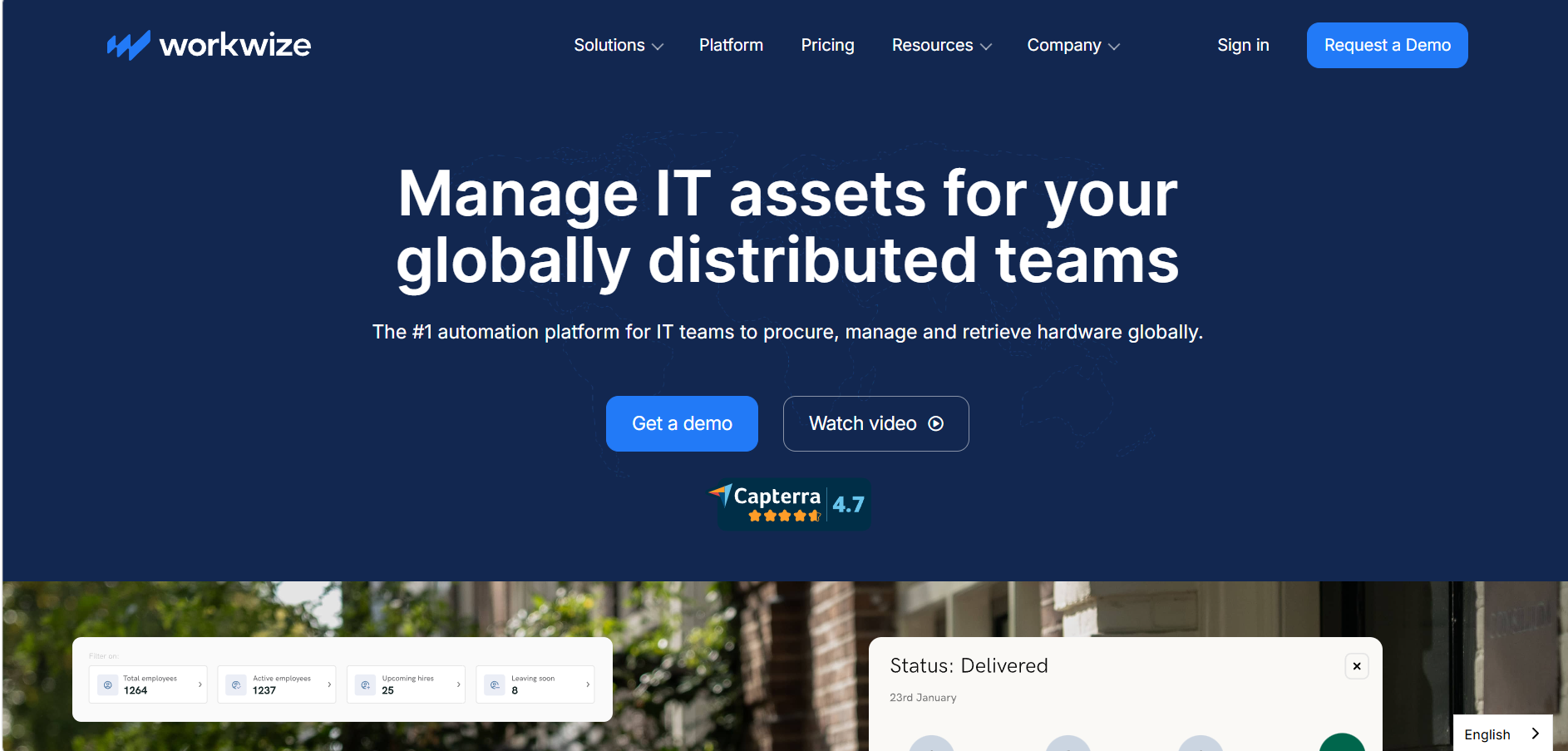
Workwize is a device lifecycle management platform that helps you manage hardware lifecycle across 100+ countries.
Unlike WWT (Softchoice), it is not a VAR or systems integrator. The platform automates one end-to-end workflow: procuring, deploying, tracking, retrieving, and responsibly disposing of IT hardware for distributed teams.
To be clear, Workwize and WWT solve different problems, so the choice between them depends on which problem actually describes your company. WWT, particularly after its 2025 acquisition of Softchoice, offers a substantially broader set of capabilities, including infrastructure architecture, cloud migration, cybersecurity, AI transformation, and software asset management, compared to Workwize.
If your IT environment requires that breadth, those capabilities have real strategic value, and device procurement becomes one workstream inside a larger account relationship.
Workwize doesn't try to offer any of that. It’s a specialized hardware lifecycle management platform for global teams seeking a reliable partner to manage their equipment logistics.
WWT and Softchoice deliver IT asset management (ITAM) as part of services engagements built around licensing scale and account management. Workwize delivers it as a self-serve platform built around the physical movement of hardware (local fulfillment, international retrievals, redeployments), which is operational infrastructure rather than a services contract you negotiate.
WWT operates from more than 55 locations with the bulk of its delivery infrastructure in the US. Workwize is structured the other way, with in-country warehousing in major markets and local-to-local delivery within 2 to 4 days, regardless of where the new hire is based.
By contrast, WWT and Softchoice make the most sense for large enterprises, typically organizations with several thousand employees. Workwize is built for a different kind of company, generally between 300 and 5,000 employees hiring across multiple continents, often with a lean IT operations team.
For such a company, a platform built around device flow fits the actual problem more closely than an enterprise services contract, and it does so at a meaningfully lower total cost because you pay only for the layer you actually use.
Top offerings:
- Procurement: Source IT hardware across 100+ countries from a single dashboard, with local fulfillment from regional warehouses in 2-4 business days.
- Deployment: Zero-touch device deployment with MDM pre-configuration, triggered automatically by HRIS onboarding events so devices arrive ready to use on day one.
- Management: Real-time asset tracking by employee, location, status, and lifecycle stage, with a live dashboard, full audit history, and 100+ integrations across HRIS, MDM, identity, and finance tools.
- Retrieval: Offboarding events in your HRIS trigger deprovisioning, device pickup, and certified wipe across 100+ countries, without manual coordination across regions.
- Disposal: Certified ITAD with documented data destruction, reuse, and recycling, plus up to 45% value recovery on resold devices.
Reviews, ratings, and testimonials
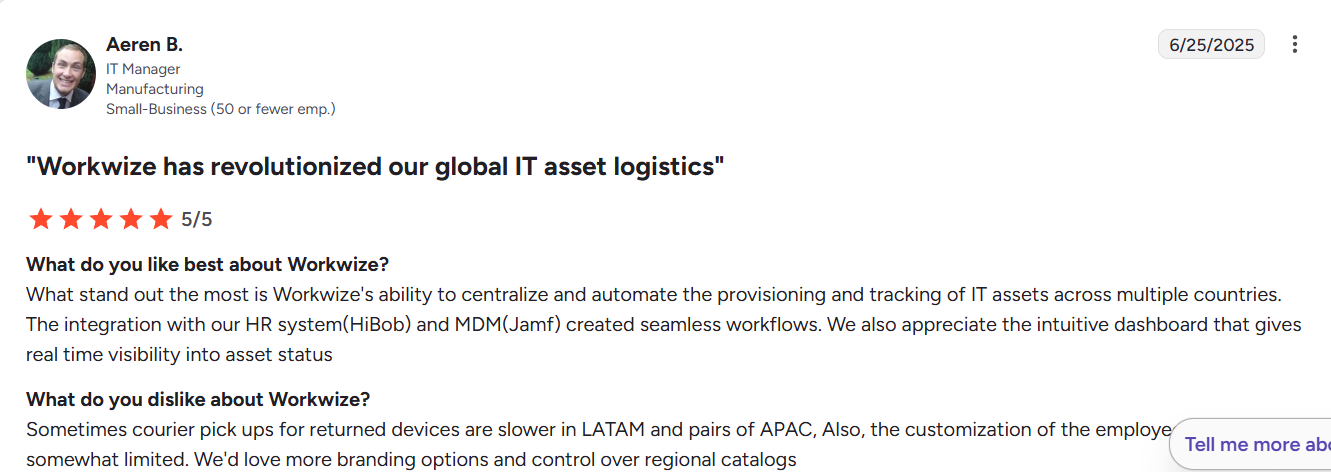
- G2: 4.7/5 (50+ reviews)
- Capterra: 4.8/5 (20+ reviews)
- Trustpilot: 4.8/5 (100+ reviews)
Via G2
Limitations/Known issues
- Focused on hardware lifecycle, not enterprise software licensing or Microsoft volume agreements.
- Less suited for organizations with concentrated single-site IT estates rather than distributed workforces
- Best paired with a separate licensing partner or systems integrator when those capabilities are needed alongside lifecycle management
2. CDW
Best for: Mid-market and enterprise IT teams in the US, UK, and Canada that want one provider for procurement, managed services, and industry-specific solutions across education, government, and healthcare.
CDW is a publicly traded IT solutions provider, serving business, government, education, and healthcare customers across the US, UK, and Canada. The company sells hardware and software from nearly every major OEM. And it runs a managed services practice with over 1,000 certified experts.
Both CDW and WWT sell IT to large organizations, but you'll likely find they sell to different kinds of buyers. If you're running a Fortune 500 infrastructure programme or a federal account, WWT's strength is the Advanced Technology Center, where you can test complex setups before rolling them out.
On the other hand, if you're more commercial or mid-market, or if you sit in education, state government, or healthcare, CDW will probably feel like a better fit.
But neither company runs ITAM as a connected, end-to-end workflow.
That can work for you if ITAM is one piece of a larger procurement relationship. But if your main need is ongoing hardware lifecycle management across many countries, you may want to consider an option like Workwize alongside CDW.
Top offerings:
- Multi-brand technology procurement across major OEMs
- Managed services across security, applications, infrastructure, and hybrid cloud
- CDW Government (CDW-G) for K-12, higher education, state and local government, and healthcare
- Cloud services across AWS, Azure, and Google Cloud
- Microsoft 365 managed services and software licensing
- E-Rate program for K-12 schools and libraries
Reviews, ratings and testimonials
Limitations
- Offers less emphasis on deep strategic consulting or long-term solution architecture.
- Has relatively limited in-house engineering and implementation resources for highly complex environments.
- Comparatively less global delivery infrastructure than some international competitors.
3. SHI International
Best for: Enterprises with complex software portfolios that want strong licensing optimization alongside hardware procurement, cloud, and IT asset management.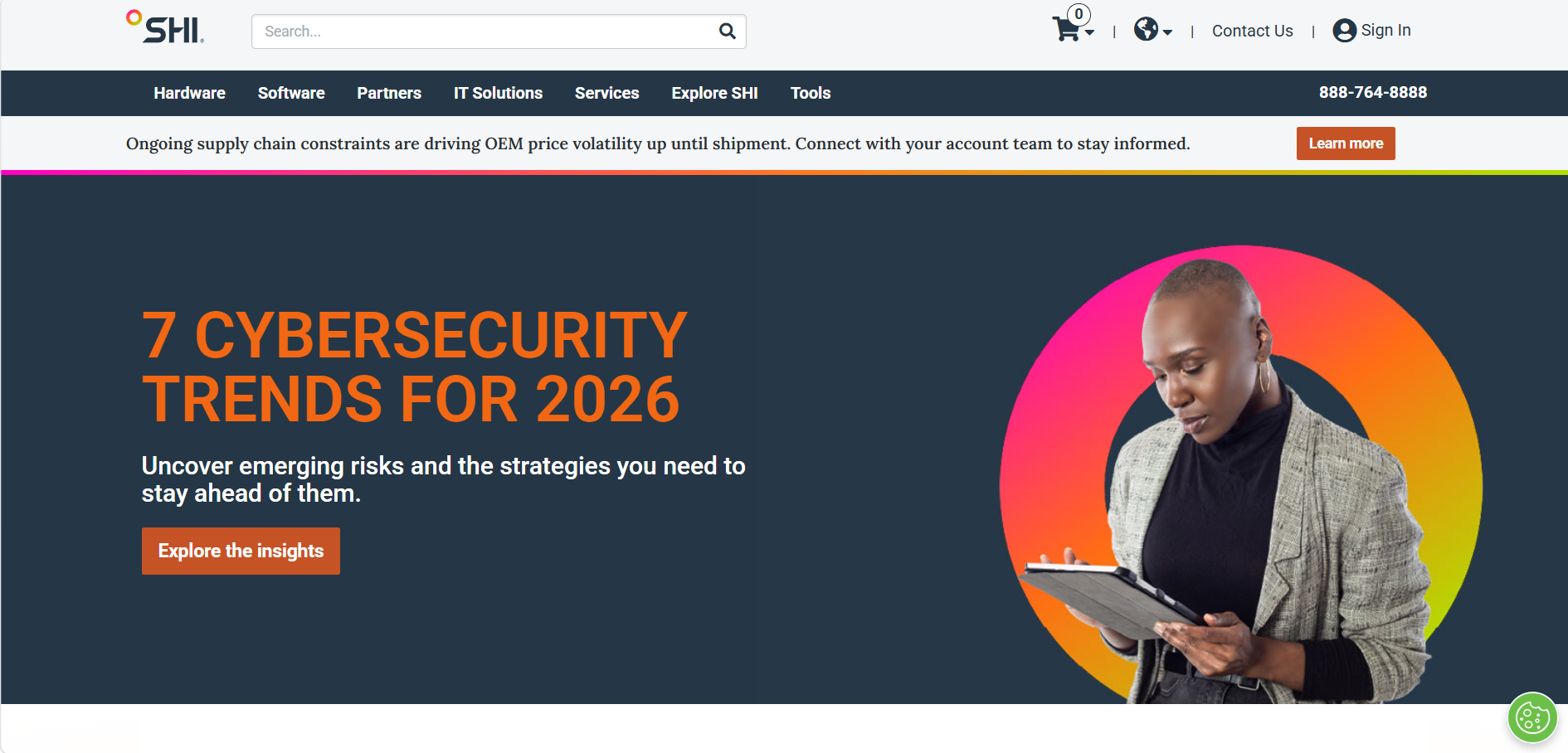
SHI is an IT solutions provider that started as a software reseller in 1989 and has built its reputation on software licensing. Today, its Software Licensing Experts handle complex, multi-vendor contracts across 35+ countries.
They cover licenses from giants like Microsoft, Adobe, Oracle, and over 1,000 other publishers. Other services include hardware procurement, cloud and data center services, and cybersecurity.
Picking between SHI and WWT usually depends on which side of your stack needs the most help. WWT leads with the Advanced Technology Center for testing complex infrastructure setups before deployment. SHI, on the other hand, offers licensing expertise and software asset management.
On ITAM, SHI gives you more than CDW or WWT do.
It runs in-house ITAM, software asset management, and FinOps teams plus its Polaris ITAM tool. But SHI's real expertise is software license tracking and compliance. If you also need ongoing global device flow such as onboarding, tracking, retrieval, and IT asset disposal (ITAD) across many countries, you may want to consider an option like Workwize alongside SHI.
Key offerings
- Software asset management and license advisory across Microsoft, Adobe, and major SaaS publishers
- Hybrid cloud and FinOps services with cost optimization modeling
- Hardware procurement and configuration through SHI integration centers
- IT asset disposition and lifecycle services for select geographies
- Custom procurement portals tailored to enterprise customers
Reviews, ratings and testimonials
Limitations
- Account management and strategic support can vary depending on the individual representative and client segment
- Focuses more on software licensing and hardware resale than on building proprietary managed services or automation platforms
- Relies heavily on vendor ecosystems rather than maintaining deep independent technical capabilities across all solution areas
4. Insight Enterprises
Best for: Mid-to-large enterprises running cloud or data center transformation projects alongside their procurement spend.
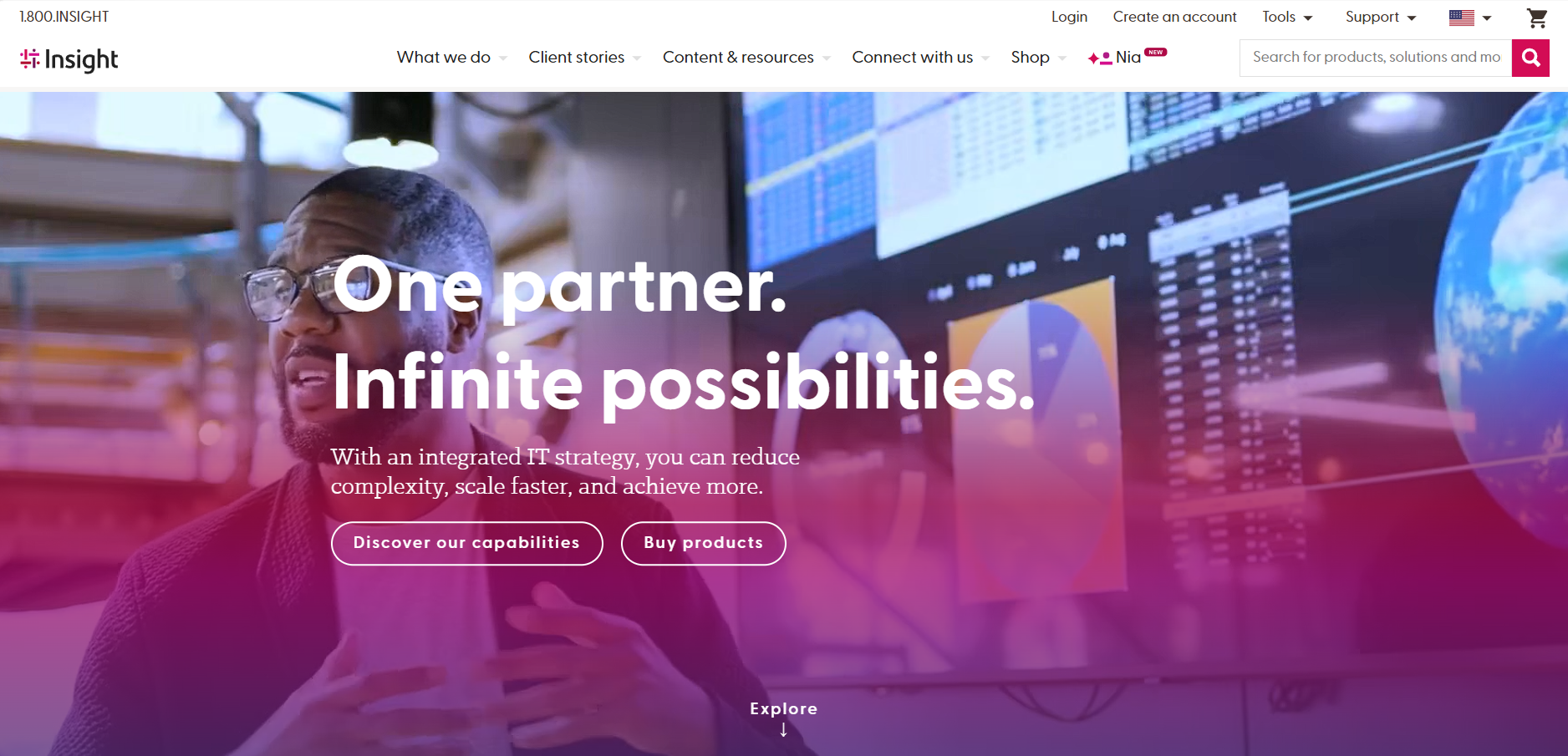
Insight is a Fortune 500 systems integrator that organizes its business around four practice areas: Cloud + Data Center Transformation, Digital Innovation, Connected Workforce, and Supply Chain Optimization.
It also offers hardware procurement, software licensing, managed services, and IT asset management. Insight has strong partnerships across Microsoft, AWS, and Google Cloud, with multiple Microsoft Partner of the Year recognitions over the years.
While WWT leads with its Advanced Technology Center, Insight’s main strength is end-to-end transformation services, often anchored in Azure or other hyperscaler cloud migrations.
Naturally, if your work is centered around modernizing legacy infrastructure or moving to the cloud, Insight is better suited for you.
For asset management, Insight offers ITAM and ITAD, but tools like SnapStart are built to inventory infrastructure during transformation projects, not to manage employee devices across countries on an ongoing basis. That second job is closer to what a platform like Workwize is built for.
Key features
- Cloud and data center migration with multi-hyperscaler practice
- Digital innovation services covering AI, automation, and data engineering
- Device procurement and configuration through integration centres
- Software and licensing management
- Operations across 19 countries with offices in EMEA and APAC
Reviews, ratings and testimonials
Limitations/Issues
- Some customers have reported poor communication and lack of proactive updates throughout the ordering and support lifecycle
- Inconsistent account management, making it difficult to reach the right person or get timely resolutions
- Issues with order fulfillment, product availability, and billing accuracy
5. Presidio
Best for: Mid-market and commercial enterprises that want a managed services partner across cloud, security, networking, and collaboration, particularly in the US.
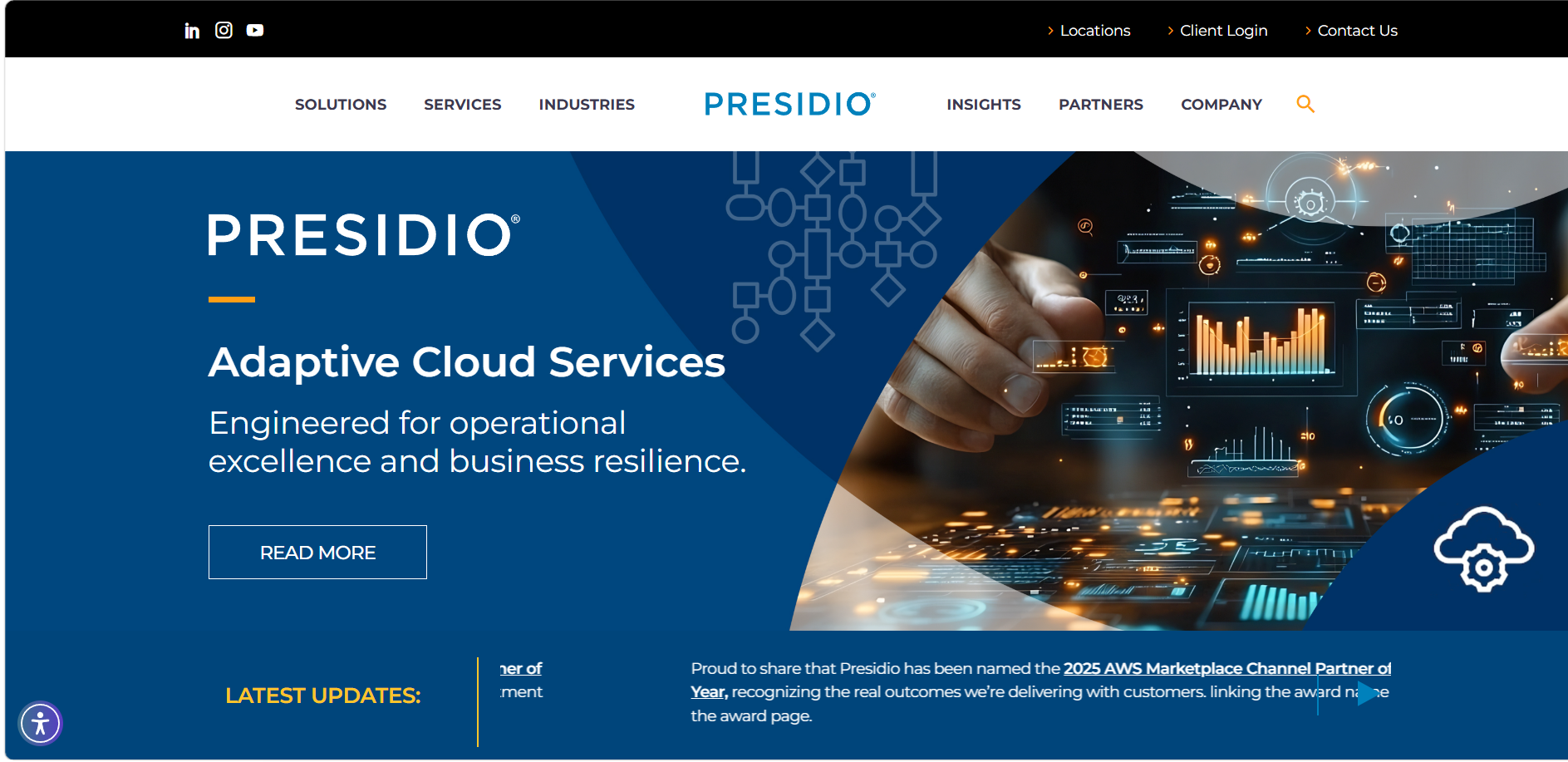
Presidio is a US-based IT solutions provider that serves nearly 7,000 middle market, enterprise, and government clients through 60+ US offices and a growing presence in Europe and APAC. Presidio's core work is managed services across cloud, security, networking, and collaboration, anchored by deep partnerships with Cisco and AWS.
Presidio and WWT both work on enterprise infrastructure, but they go to market differently.
WWT is built for large enterprise and federal programs. Presidio sits closer to ongoing managed services contracts for mid-market and commercial buyers, often built on Cisco networking or AWS cloud. If your stack is Cisco-heavy or you want a long-term managed services partner rather than a project-based engagement, Presidio is a good fit.
Regarding asset management, Presidio's lifecycle work occurs within its managed services contracts and focuses on infrastructure rather than employee device flow. For ongoing global device management, again, a platform like Workwize sits closer to the problem.
Key features
- Full-lifecycle managed services covering procurement, implementation, management, and support
- Multi-cloud governance and FinOps for AWS, Azure, and Google Cloud
- Managed Detection and Response with 24x7x365 security event monitoring
- Modern Networking and Modern Infrastructure Management for hybrid environments
- Global Procurement and Logistics Management with payment and consumption financing
Reviews, ratings and testimonials
Limitations/Known issues
- Reports of inconsistent service delivery and follow-through on commitments
- Limited technical depth in certain emerging or specialized technology areas compared to more focused partners
- Slower response and escalation times on complex technical issues.

6. Zones
Best for: Distributed enterprises that need a single VAR for global IT procurement and supply chain execution across many countries, particularly in retail, healthcare, and financial services.
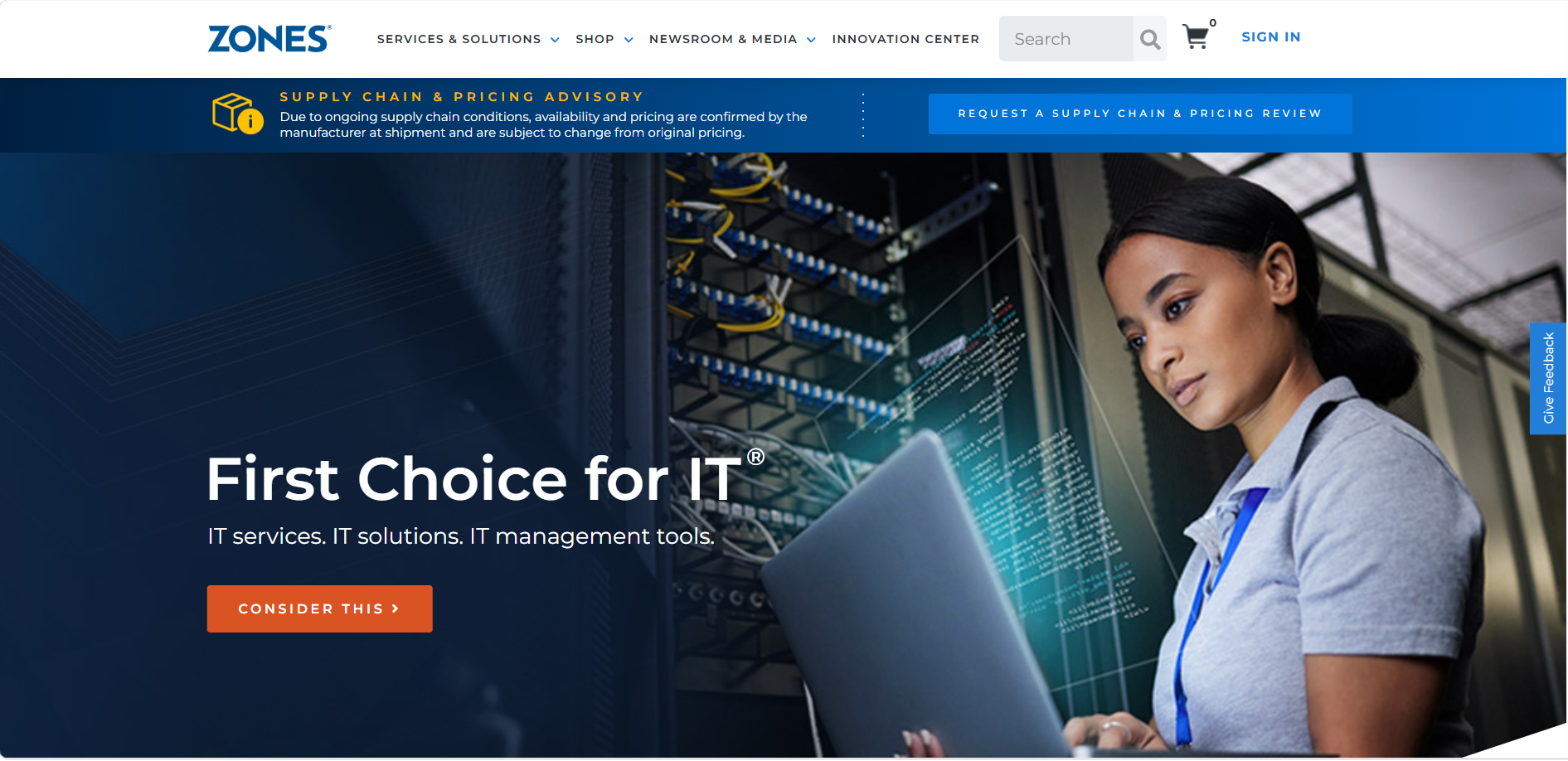
Zones’ business is organized around four practice areas (Workplace Modernization, Network Optimization, Data Center Transformation, and Security Fortification), with a global supply chain practice that handles logistics, freight, warehousing, and sourcing through the ZonesConnect ordering platform.
Compared to WWT, Zones leans further into geographic reach and lifecycle execution. WWT centers its delivery around the Advanced Technology Center and US-based infrastructure work. But Zones reaches more countries through owned offices, which makes it one of the cleaner options if you want a single VAR for multi-region hardware rollouts.
It also does more lifecycle work than most VARs on this list, covering procurement through decommissioning, including data sanitization and ITAD. That said, this is still a VAR model with project-based engagements, not a self-service platform.
Key offerings
- Digital workplace services covering device procurement, configuration, and deployment
- Cloud and data center migration, optimization, and management
- Networking and security solutions across the major OEM ecosystems
- Global procurement and logistics with order processing through ZonesConnect
- Managed and professional services for enterprise IT
Reviews, ratings and testimonials
- G2: 4.3/5 (2 reviews)
- Capterra: N/A
- Gartner Peer Insights: N/A
Limitations/Known issues
- Low volume of public customer reviews makes performance consistency difficult to evaluate.
- Smaller operational scale limits resources and capacity for large enterprise or multi-site deployments.
- Narrower portfolio breadth and fewer strategic vendor relationships compared to major national players
7. Logicalis
Logicalis is a global managed services provider that helps enterprises run their ongoing IT environments rather than build new ones from scratch. Its most distinguishing feature is the Managed Digital Fabric Platform, an AI-powered scorecard that rates a customer's entire managed environment in real time across five metrics: availability, security and compliance, economics, user experience, and environmental impact.
Logicalis is also one of the few providers on this list with built-in sustainability tracking and genuine local presence in Africa and Latin America.
Compared to WWT, Logicalis fits a different problem. WWT is the right pick if you need lab-validated infrastructure design for complex multi-vendor setups, with delivery concentrated in North America. Logicalis fits if you want ongoing managed services with built-in visibility and AI recommendations, particularly across regions where WWT typically delivers through partners.
On asset management, lifecycle work runs through managed services contracts and focuses on infrastructure rather than employee device flow. For ongoing global device management tied to HRIS or MDM events, a platform like Workwize sits closer to the problem.
Key features
- Managed services across cloud, connectivity, security, and collaboration
- Lifecycle services structured to optimize operations and reduce risk
- Strong regional presence in EMEA, LATAM, and APAC (Australia, Singapore, Malaysia, and others)
- Cisco, Microsoft, and AWS strategic partnerships with multi-vendor delivery
- Sustainability-focused service portfolio with carbon footprint reporting
Reviews, ratings and testimonials
- G2: N/A
- Capterra: N/A
- Gartner Peer Insights: N/A
Limitations/Known Issues
- Very low volume of public reviews and feedback makes it hard to assess reliability and service quality
- Smaller size and lower brand recognition often result in lower priority from major hardware and software vendors
- Limited capacity and resources for very large-scale or highly complex global projects
8. AHEAD
Best for: Mid-market and large enterprises building AI infrastructure or modernizing data centers, particularly in regulated industries.

AHEAD is a US-based systems integrator covering data center modernization, cloud, AI infrastructure, security, and platform engineering. What sets it apart is AHEAD Foundry, a network of integration facilities where racks are pre-built, cabled, configured, and tested before shipping, so they arrive ready to plug in.
AHEAD also runs Hatch, a proprietary lifecycle platform that tracks data center assets from procurement through disposition.
Compared to WWT, the difference is purpose. WWT's Advanced Technology Center is a lab where customers test setups before buying. AHEAD's Foundry is a factory where infrastructure is built and validated before delivery. For ongoing global device management across employees, a platform like Workwize sits closer to the problem.
Key features
- Cloud platform engineering across AWS, Azure, and Google Cloud
- Custom AI infrastructure across cloud, core, and edge environments
- Managed services through AHEAD Foundry covering design, integration, and deployment
- FinOps, security automation, and DevOps practice depth
- Hatch IT lifecycle management platform for procurement workflows.
Reviews, ratings and testimonials
- G2: 4.3/5 (8 reviews)
- Capterra: N/A
- Gartner Peer Insights: Available in specific categories (positive reviews, e.g. 5/5 in some Data Center & Managed Services); limited overall volume
Limitations
- More regional focus can create challenges for organizations needing consistent support across wide geographic areas
- Smaller scale compared to industry leaders limits resources available for the largest enterprise engagements
- Fewer publicly documented case studies and references in certain industries or complex use cases

Where WWT Stops, and Where Workwize Starts
Most of the alternatives to WWT for distributed teams in this article were built for the same buyer WWT was built for: an IT or infrastructure leader at a large enterprise running a multi-year transformation program.
Its Advanced Technology Center is designed to help customers design, test, validate, and deploy complex technology solutions at scale.
Workwize is built on a different operating model.
The platform was designed specifically to solve IT hardware lifecycle management for distributed teams. Workwize takes over the procurement, deployment, management, retrieval, and disposal of IT assets across borders without rebuilding internal logistics. It now serves 25,000+ users and manages over 100,000 devices worldwide, with availability in 100+ countries and a local-to-local fulfillment model that ships within two to four days.
The contrast with the VAR or MSP model is apparent. Compare the same use case across both approaches:
|
Capability |
WWT |
Workwize |
|
Device procurement |
Strong for large US infrastructure orders |
Global procurement on a single dashboard, available in 100+ countries |
|
Zero-touch deployment |
Project-based and limited |
Native zero-touch deployment, with automated MDM enrollment |
|
Asset retrieval for offboarding |
Not a core service |
Automated asset retrieval workflows in 100+ countries |
|
ITAD (end-of-life) |
Partial, requires separate arrangement |
Included, with up to 45% recovery on resold devices |
|
Global lifecycle visibility |
Project-based |
Real-time IT asset tracking |
|
Speed to hire |
3 to 6 week procurement cycles |
5 to 7 day delivery using local distribution |
|
Pricing model |
Negotiated and relationship-driven |
Per-device platform pricing |
WWT is arguably stronger when the work is about designing and delivering a transformation program. Workwize is better when the problem is operational continuity: getting the right device to the right person, tracking it, recovering it, and replacing it without manual coordination.
While WWT is a transformation partner, Workwize is lifecycle infrastructure.
If tracking assets across regions is the core challenge, Explore how Workwize handles it

The IT angle
For IT teams, the main value is visibility without extra admin work. A reseller can ship a laptop, but it does not give you a live system of record for where that laptop is, who has it, when it was last updated, or whether it has been recovered at offboarding.
Workwize is designed to be that layer. Its ITAM solution centralizes procurement, deployment, tracking, and retrieval, while integrating with the tools IT already uses.
The platform manages device lifecycle management end-to-end from one dashboard, and IT asset management is structured around what the team needs to do next, not what the vendor needs to invoice.
The Finance angle
For Finance, the attraction is a better cost model. WWT and similar providers usually rely on negotiated pricing, which works well for large enterprise relationships but is harder to forecast at scale.
Workwize, by contrast, publishes per-seat pricing, which makes budgeting and vendor comparison simpler. That difference matters most when finance teams want visibility on device lifecycle costs rather than a bundled services invoice.
The HR angle
For People Ops and HR, the benefit is a smoother first-day experience. Instead of relying on a chain of manual handoffs between HR, IT, and procurement, Workwize can trigger the workflow directly from HRIS data.
That means the onboarding process is tied to the employee record and not to a series of internal follow-ups. WWT can support enterprise technology programs, but that is not the same as owning the employee hardware journey end to end.

Shashank Mishra

Establish a single source of truth for every IT asset across the globe.
.png?width=258&height=318&name=g10%20(5).png)
More related resources to help you stop firefighting hardware operations.


Get monthly insights into how other IT leaders are improving their ops.



.png?width=2880&height=1232&name=Group%202147262874%20(1).png)
Stop coordinating
hardware like it's 2012.
.svg)
.svg)
.svg)
.svg)
.svg)